위 번역 내용을 기반으로 유발 하라리가 주장하는 내용 중 핵심 내용이라고 판단되는 일부 문구를 인용해 일부 내용을 파악할 수 있도록 여기에서 소개해 봤습니다.
인류는 바이러스에 맞설 지식과 기술을 가지고 있습니다.
이번 코로나19는 바이러스가 무엇인지 확인하고, 그 유전자 지도를 파악하는 데 2주밖에 걸리지 않았어요. 그래서 인류는 적어도 누가 이 바이러스에 감염됐는지 가려내는 검사를 재빨리 할 수 있게 되었죠.
물론 바이러스의 유전자 지도를 그렸다고 바이러스를 곧바로 극복할 수 있는 건 아니지만, 분명 지금 인류는 바이러스에 맞설 지식과 기술을 갖추고 있습니다.
최악의 수는 서로 분열하는 것
지금 인간이 둘 수 있는 최악의 수는 서로 분열(disunity)하는 겁니다. 국가들끼리 서로 돕지 않고 필요한 정보도 공유하지 않으며 각자 갈 길을 가는 것만큼 위험한 게 없습니다. 신뢰의 부족도 문제인데, 비단 정부나 국가 사이에 신뢰가 부족한 것뿐 아니라 사람들이 서로 믿지 못하고 경계하는 끝에 반목하게 되는 상황이 올까 가장 걱정됩니다.
사실 지난 몇 년간 가짜뉴스와 허위 정보가 신뢰를 갉아먹고, 국가 간에도 연대하기보다 갈라서고 다투는 일이 특히 많았습니다. 세계가 전염병이 창궐하면 적절히 대응하기 어려운 환경으로 변해왔는데, 그러던 중에 코로나19가 터진 겁니다.
고립으로 절대로 전염병을 극복할 수 없다
고립(isolation)은 절대로 전염병을 막고 극복하는 해결책이 될 수 없습니다. 전염병을 극복할 수 있는 유일한 해결책은 정보(information)를 최대한 빠르고 널리 공유하는 방법뿐이에요. 지금 지구상에서 전염병이 도는데 울타리를 치고 국경을 닫는다고 바이러스를 막을 수 있을까요? 불가능합니다.
그 정도로 확실하게 고립되려면 중세 시대도 아니라 석기 시대로 돌아가야 해요. 지금 인류가 그렇게 역행하는 건 가능한 선택지가 아니죠. 지금 가장 확실하게 해야 할 경계선은 국가와 국가 사이의 경계선인 국경이 아녜요. 대신 인간의 세상과 바이러스가 사는 세상 사이에 쉽게 넘나들 수 없는 단단한 벽을 세우는 일이 지금 가장 중요한 과제라고 할 수 있습니다.
함께 대처하는 의료 체계를 구축해야
전 세계적으로 유행병에 함께 대처하는 의료 체계를 구축해야 합니다. 그러니까 지금 서아프리카든 이란이든 중국이든 어디서든 발생한 병을 그저 그 지역, 그 나라, 남의 공동체 문제로 치부할 게 아니라 바이러스가 들어와선 안 되는 인간 세계로 뚫고 들어왔다면 모두가 경각심을 가지고 적극적으로 대처해야 합니다.
세계보건기구(WHO) 같은 조직도 더 강화해야 하고, 국제적인 연대도 더 키워야 합니다. 그래서 지금 전염병과 사투를 벌이고 있는 나라가 있다면, 의료 장비든 인력이든 보낼 수 있는 걸 보내서 돕고, 무엇보다도 정확한 정보를 공유하는 것이 중요합니다.
경제적인 지원도 곧바로 이뤄져야 합니다. 전염병이 처음에 특정 지역에서 발생했다고 칩시다.
이때 해당 정부가 바이러스 때문에 적극적으로 해당 지역을 봉쇄하고 경제활동을 중단해버리면 그로 인해 받게 될 경제적 타격이 두려워서 전염병이 얼마나 심각한 건지 확실해질 때까지 기다려보자는 판단을 내릴 수도 있습니다.
신뢰의 복구가 가장 시급
우선 지금 가장 시급한 문제는 신뢰가 곳곳에서 무너져내렸다는 점입니다. 정부를 믿지 않고, 언론이 전하는 정보를 믿지 않는 사람이 특히 최근 들어 굉장히 많아졌습니다.
격리 조치가 바이러스를 억제하는 데 효과적일 만큼 제대로 이뤄지려면 사회 구성원들이 똘똘 뭉쳐 일사불란하게 움직여야 합니다. 그러나 신뢰가 무너져내린 상황에서 얼마나 효과적으로 사람들이 행동을 맞출 수 있을지 모르겠습니다.
감시체계의 엄청난 강화
또 다른 문제는 감시 체계가 엄청나게 강화될 거라는 점입니다. 평소 같으면 큰 저항에 부딪혔을 이런 정책이 코로나19로 일어난 준전시 상황 때문에 용인되고 정당화될 수 있습니다.
특히 코로나19를 극복하고 난 다음에도 생체학 신호를 포착하고 추적해 기록하는 감시 체계는 계속 살아남아 우리를 옥죌 수 있습니다.
전염병 극복을 위한 두가지 방법
지금의 이런 상황에 대처하는 방법으로 크게 두 가지가 있다고 봐요.
첫째는 사람들에게 필요한 정보를 주는 겁니다. 사람들이 그 정보를 제공하는 주체를 믿고, 그래서 그 정보를 신뢰한다면 사람들은 적어도 전염병이 진정될 때까지는 사람이라서 으레 하고 싶은 행위를 자제하려고 노력할 겁니다. 물리적인 접촉을 삼가고 내가 좋아하고 사랑하는 사람에게 혹시 모를 바이러스가 옮을 수 있는 가능성을 차단하는 쪽으로 행동하게 되겠죠.
둘째는 전체주의 접근법입니다. 이는 현대 기술의 발달 덕분에 가능해진 새로운 방법으로 중세 시대 때는 그렇게 하고 싶어도 할 수 없었던 일입니다. 전체주의 접근법이란 그 기술을 활용해 구축할 수 있는 최대한 강력한 감시 체계를 구축하고 이를 통해 사람들의 프라이버시보다 공중 보건에 압도적으로 더 큰 가치를 두고 전염병에 직접 맞서는 겁니다.
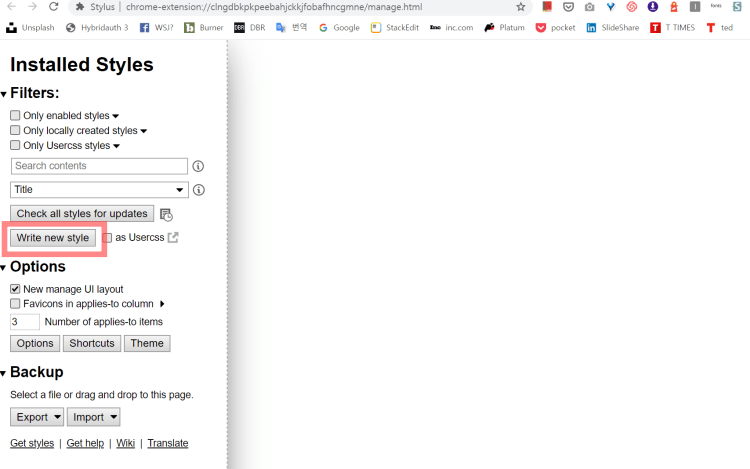
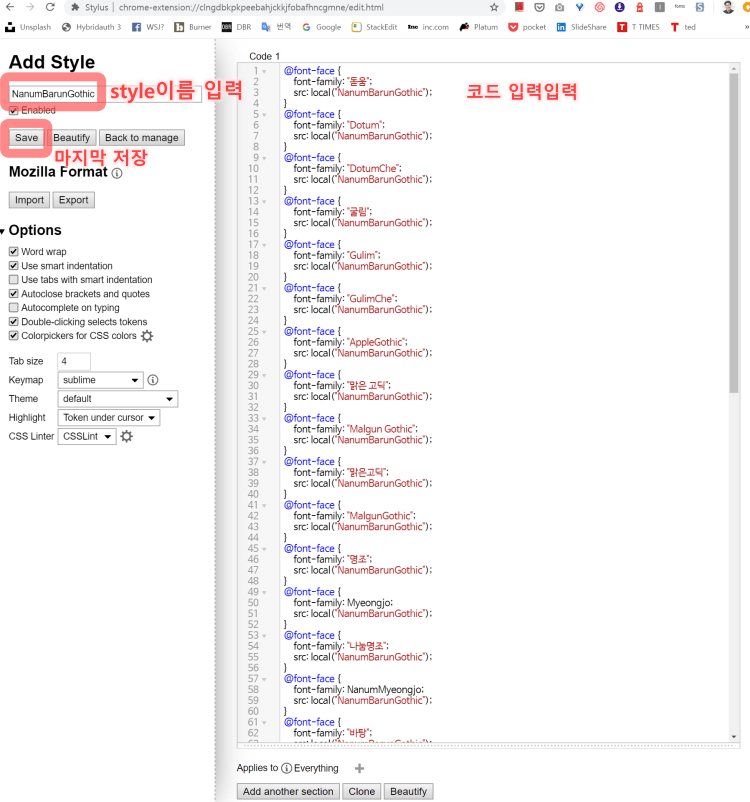
이 확장 프로그램에서도 css를 잘 다룰 수 있다면 stylus를 사용하라고 권고하고 있기는 합니다. 아무래도 우리나라 웹사이트들 중에서 HTML 표준을 지키지 않고 독자적인 코드를 사용하는 곳들이 있다 보니 stylus css 명령이 제대로 먹히지 않나 생각해 봤습니다.
이 기본 코드를 기반으로 컬러나 마진 그리고 글자 크기 등을 조정해서 더 강조하는 인용 스타일을 만들 수 있습니다.
우선 폭을 600px로 제한했으며, 왼쪽 라인의 두께를 5px에서 10px로 조정했습니다.
“이 폭풍은 지나갈 거예요. 하지만 지금 우리가 하는 선택들은 앞으로 오랬동안 우리의 삶을 바꿀 수 있습니다. 우리는 두가지 중요한 선택해 직면해 있습니다. 첫째는 전체주의적인 감시와 시민 역량 강화 사이, 둘째는 민족주의적 고립과 글로벌 연대 사이의 선택입니다. – 유발 하라리
blockquote {
max-width: 600px !important; /*인용문 폭 조정, !important가 있어야 제대로 작동 */
border-left: 10px solid rgba(0, 0, 0, 0.05); /*왼쪽 가로 두께 및 색 변경 */
padding: 20px;
font-size: 1.3em; /*인용문 글자 크기 변경 */
font-style:italic;
margin: 001.5em; /*margin: 0 0 1.5em; */
position: relative;
}Code language:PHP(php)
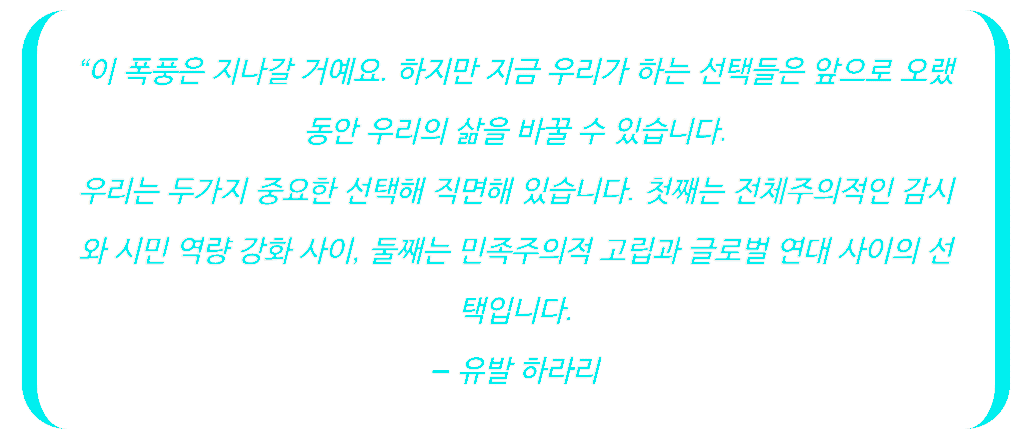
괄호 형식의 인용문 스타일(Blockquote Style)
간단하게 워드프레스에서 적용할 수 있는 인용 스타일(Blockquote Style)은 괄호를 이용하는 것인데요.
워드프레스 인용 스타일_괄호 형식
아래 css 코드를 활용해 변경합니다.
blockquote {
max-width: 600px !important; /*인용문 폭 조정, !important가 있어야 제대로 작동 */
text-align: center;
margin: 20px;
padding: 20px;
font-size: 20px; /*인용문 글자 크기 변경 */
color: #04d39f; /*인용문 글자색 변경 */
border-left: 10px solid #04d39f; /*왼쪽 가로 두께 및 색 변경 */
border-top-left-radius: 30px;
border-bottom-left-radius: 30px;
border-right: 10px solid #04d39f; /*오른쪽 가로 두께 및 색 변경 */
border-top-right-radius: 30px;
border-bottom-right-radius: 30px;
}Code language:PHP(php)
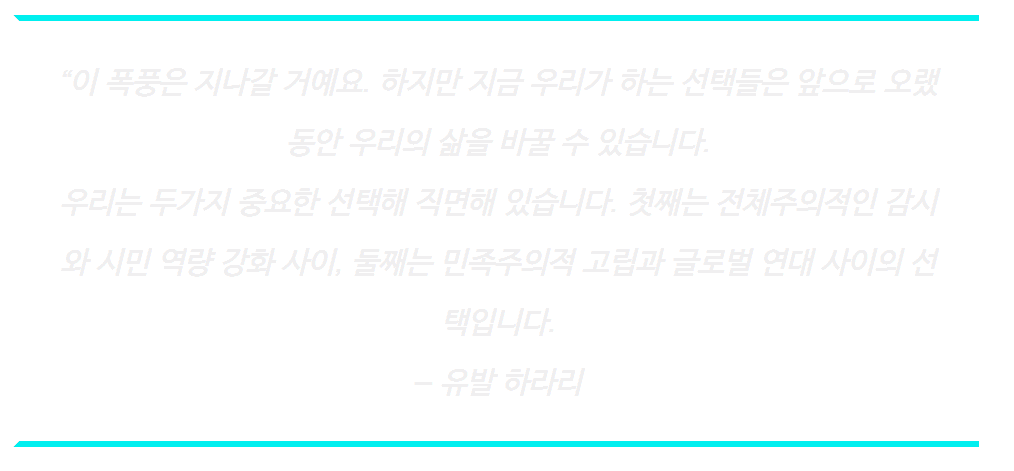
위 아래 줄을 이용한 인용문 스타일(Blockquote Style)
인용문 위 아래로 줄을 만들어 인용문을 강조하는 방법입니다.
워드프레스 인용문 스타일_위 아래 줄(라인) 적용 형식
blockquote {
max-width: 600px !important; /*인용문 폭 조정, !important가 있어야 제대로 작동 */
margin: 20px;
padding: 20px;
text-align: center;
font-size: 20px; /*인용문 글자 크기 변경 */
color: #7f7f7f; /*인용문 글자색 변경 */
border-left: 4px solid #FFFFFF; /*왼쪽 가로 두께 및 색 변경, GeneratePres 테마에서 기본으로 회색으로 보이므로 보이지않토록 화이트로 지정 */
border-top: 4px solid #04d39f; /*위 줄 두께 및 색 변경 */
border-bottom: 4px solid #04d39f; /*아래 줄 두께 및 색 변경 */
}Code language:PHP(php)
최근 과학기술정보통신부가 발표한 2019 인터넷이용실태조사 보고서를 기반으로 91.8%에 달하는 한국 인터넷 이용율 등 관련 자료를 정리해 봤습니다.
연도별 인터넷 이용률 추이
2019년 기준 인터넷 이용률은 91.8% 전년 2018년 비 0.3%p 증가 ITU(국제전기통신연합) 기준에 따라 만 16세 이상 74세 이하 인구 중 최근 1년 이내 1회 이상 인터넷을 이용한 자의 비율
한국은 1994년 처음으로 인터넷 상용 서비스를 시작
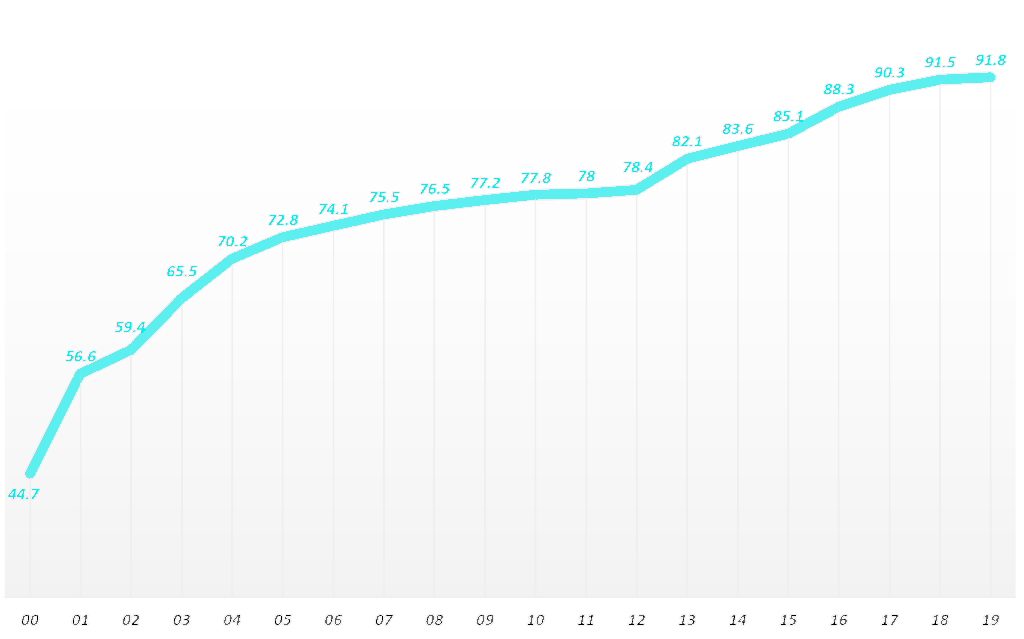
2000년 인터넷 이용률은 44.7%(1,904만명)에 불과했으나 2001년 전년 비 11.9%p 증가하며 처음으로 과반(56.6%)을넘음
이후 지속적으로 증가하여 2004년에는 인터넷 이용률이 70.2%, 이용자수가 3,158만명으로 2000년 대비 25.5%p(1,254만명) 증가함
2005년(72.8%) 이후 인터넷 이용률(2006년 74.1%, 2007년 75.5%, 2008년 76.5%, 2009년 77.2%, 2010년 77.8%, 2011년 78.0%, 2012년 78.4%, 2013년 82.1%, 2014년 83.6%)의 증가폭은 3%p 내외로 안정적인 증가세를 유지하였음.
인터넷 사용률 추이 그래프
연도별 한국 인터넷 이용률 추이(2000년 ~ 2019년), Graph by Happist
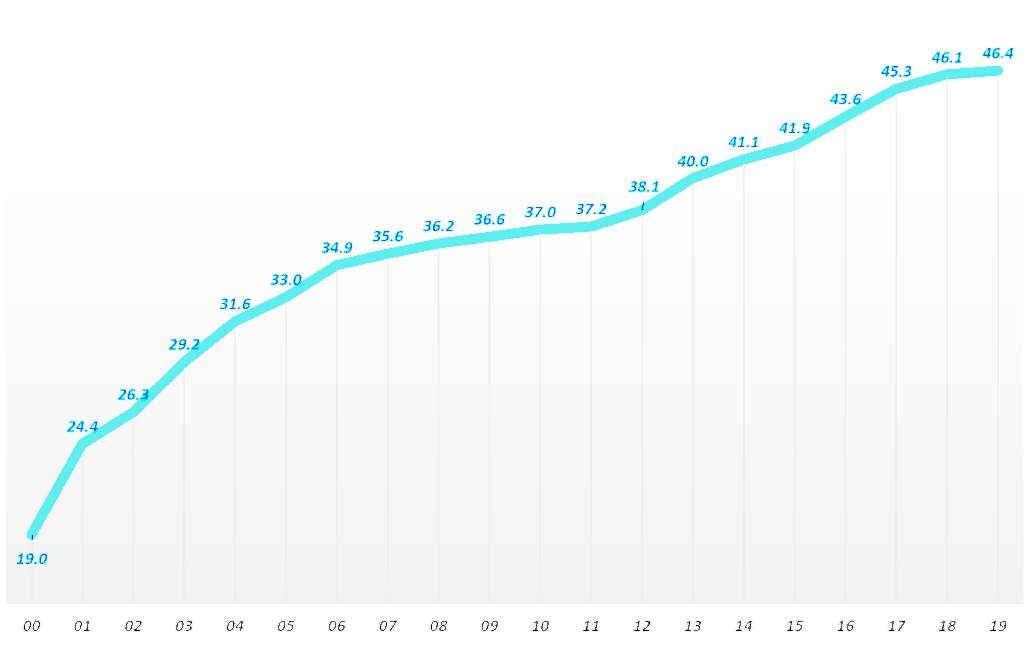
인터넷 사용자 수 추이 그래프
연도별 한국 인터넷 이용자 수 추이(2000년 ~ 2019년), Graph by Happist
가구 인터넷 접속률 추이
연도별 한국 가구 인터넷 접속률 추이(2000년 ~ 2019년), 과기부 연도별 인터넷이용실태조사 자료기반 Graph by Happist
2019년 한국 인터넷 이용률 현황
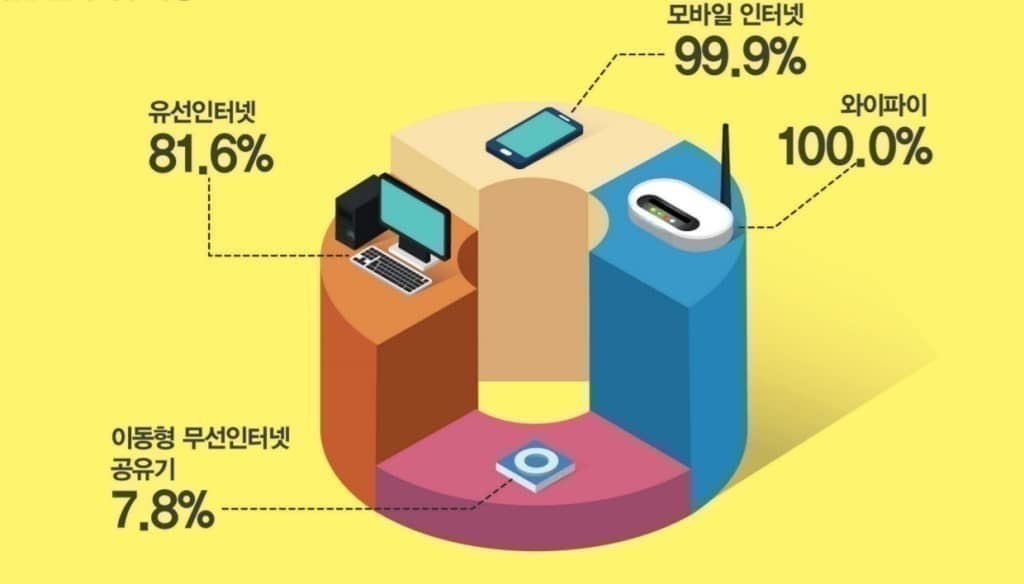
가구별 인터넷 접속률은 99.7%(전년 비 0.2%p↑)로 거의 모든 가구에서 인터넷을 접속하고, 접속 가구는 와이파이(100%), 모바일 인터넷(99.9%) 등 무선방식을 통해 주로 접속하는 것으로 나타남.
한국 인터넷 이용률은 91.8%(전년 비 0.3%p↑)로 소폭 상승하였고, 여성(0.5%p↑)이 남성(전년 동일)보다 높은 상승률을 보여, ’15년 이후 성별 이용률 격차가 감소하였음.
한국민의 인터넷 이용 현황을 보면 주 평균 17.4시간(0.9시간↑), 하루에 1회 이상(93.9%, 1.4%p↓) 이용하고, 소통을 위한 커뮤니케이션(95.4%), 정보수집(94%), 게임·영화 등 여가활동(94%) 등이 주요 목적인 것으로 나타남.
한국민의 81.2%가 동영상서비스를 이용(매일 이용자도 73.7%)하고, AI 음성인식 서비스는 이용 초기단계이나 의미있는 이용률인 25.2%를 기록했으며, 인터넷쇼핑과 인터넷뱅킹 이용률은 각각 64.1%와 64.9%로 확인됨.
인터넷 접속 방법
접속 방법에 따른 인터넷 접속 방법은 와이파이 100% > 모바일 인터넷이 99.9% > 유선인터넷 순으로 무료로 사용 가능한 와이파이 비율이 가장 보았음
2019 인터넷이용실태조사 보고서_인터넷 접속 방법
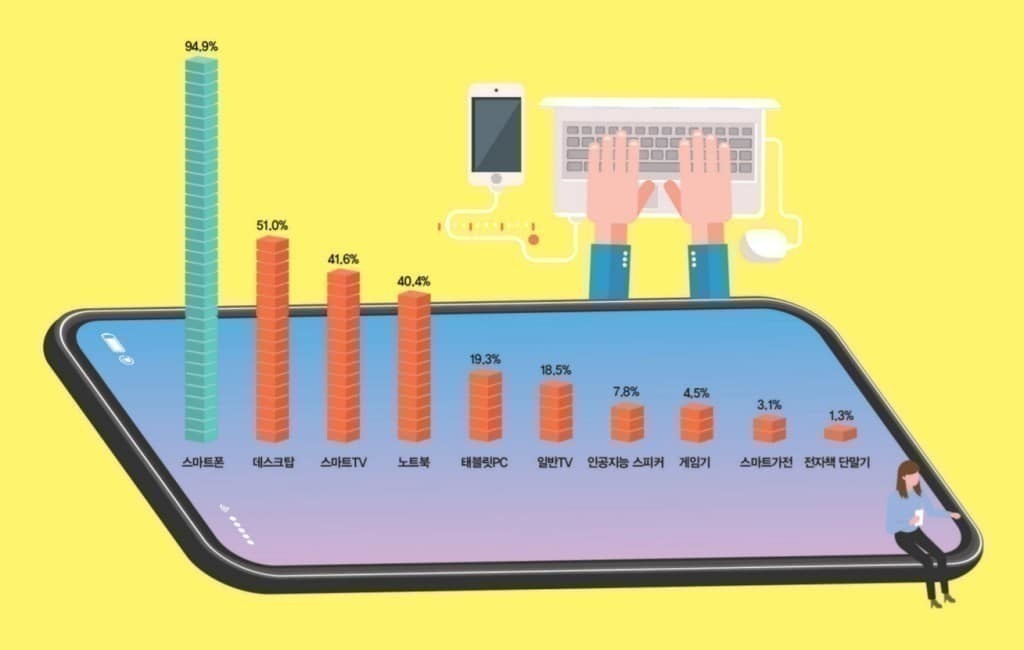
인터넷 접속기기
어떤 기기로 인터넷을 접속하는지에 대한 조사에서 스마트폰이 가장 높은 94.9%를 차지했으며 그 다음으로 데스크탑이 51%로 2위를 차지해 1위와 2위간 간격이 컸음
2019 인터넷이용실태조사 보고서_인터넷 접속기기 비율
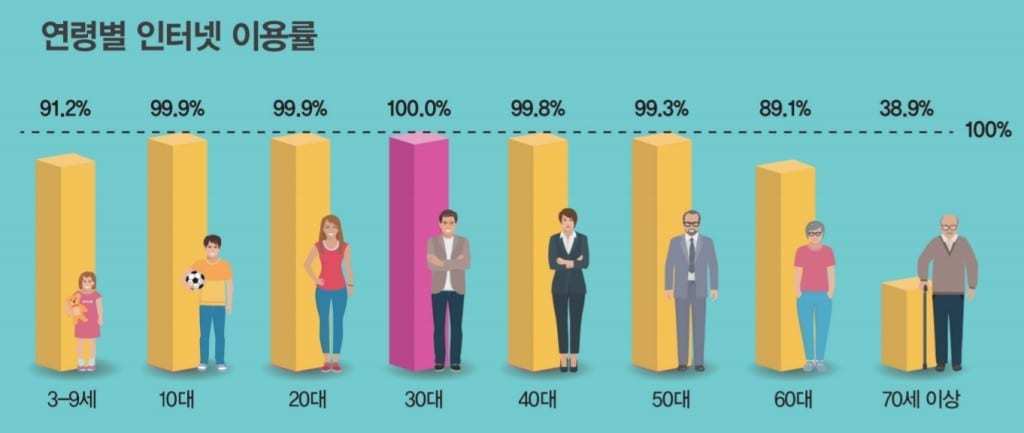
연령별 인터넷 이용률
인터넷 사용자는 4천 6백 3십5만명으로 91.8%에 달하지만 연령별로는 조금 차이가 있음
10대에서 50대까지는 100%에 가까운 인터넷 사용률을 보이지만 60대는 89% 그리고 3~9세 아동은 91.2%로 90% 정도의 사용률을 보이고 있으며, 70세이상은 38.9%로아직 낮음
이러한 인터넷 이용률을 2015년과 비교 시 3~9세 아동은 79.8%에서 91.2%로 크게 올랐으며, 60대는 59.6%에서 89.1% 그리고 70대이상도 17.9%에서 38.9%로 크게 사용률이 올랐음
즉 인터넷 사용이 아동뿐만이 아니라 할아버지 할머니들까지 빠르게 확산되고 있다고 해석할 수 있음
페이지 폭도 750px로 줄어버리기 때문에 페이지에서 다양한 방법 또는 폭을 활용해 콘텐츠를 구성하려는 경우 다소 남감한 상황이 될 수 있겠죠.
이런 문제를 풀기위해서 페이지 콘텐츠 영역을 넓게하고, 포스트에서만 좁게 보이는 방법을 찾아볼 필요가 있습니다.
일반적으로 포스트에만 적용하려면 .single css 코드를 사용합니다. 제가 여러가지 시행착오 끝에 확인한 것은 페이지는 적용되지 않고 블러그 포스팅만 적용되는 것은 아래 코드에서 부여주는 것처럼 .single .inside-article 코드를 사용하는 것이었습니다.
코로나19 종식을 위해서 중국과 같은 전제주의적 방식을 택할 것인지 한국과 같은 시민 역량을 고양하는 전략을 택할 것인지, 그리고 글로벌 분열의 길을 갈것인지 아니면 글로벌 연대의 길을 갈것인지에 따라 세계의 미래는 달라진다고 주장합니다.
이글의 일부를 번역한 글이나 내용이 클리앙이나 언론을 통해 공유되었고, 토요일 오전 내내 페북에도 널리 공유되었길래 관심을 가지고 읽어보았습니다.
그리고 그 빠진 부분 번역을 추가하고 파이낸셜타임즈는 유료이기 때문에 원래의 영문 기사에 접근이 어렵다는 분들이 있어서 영문 내용도 같이 올려 공유드립니다.
유발 하라리(Yuval Noah Harari)는 코로나19 이후 미래를 결정할 두가지 선택에 대해서 경고하고 있다
유발 하라리는 이번 선택이 미래를 결정할 것으로 전망
이 폭풍은 지나갈 거예요. 하지만 지금 우리가 하는 선택들은 앞으로 오랬동안 우리 삶을 바꿀 수 있습니다.
This storm will pass. But the choices we make now could change our lives for years to come
인류는 지금 글로벌 위기에 직면해 있습니다. 아마도 우리 세대가 격는 가장 큰 위기일 것입니다.
향후 몇 주 동안 사람들과 정부가 내린 결정이 아마도 앞으로 몇 년 동안 세계에 큰 영향을 미칠 것입니다. 이는 의료 시스템뿐만이 아니라 우리의 경제, 정치, 문화도 깊은 영향을 받을 것입니다.
우리는 신속하고 결단력 있게 행동해야 합니다. 또한 우리의 행동이 가져올 장기적인 결과를 숙고해 봐야 합니다. 여러 대안 중 하나를 선택할 때, 우리 자신에게 닥친 즉각적인 위협을 극복하는 방법뿐만 아니라, 이 폭풍이 지나간 후 우리는 어떤 세상에 살게 될 것인가를 스스로에게 자문해 봐야 합니다.
네. 이 폭풍이 지나가고 인류는 살아남을 것입니다. 우리들 대부분은 여전히 살아 있을 것입니다. 하지만 우리는 (지금과는) 다른 세상에 살고 있을 것입니다.
많은 단기적인 비상 조치들은 이제 우리 삶의 일부가 될 것(당연한 것으로 치부될 것입니다. – 역자 주) 입니다. 그것이 비상 조치의 특성입니다. 이는 지난 역사의 전철을 밟듯 빠르게 진행될 것입니다.
보통 때는 몇 년의 숙고가 필요할 수 있는 결정이 단 몇 시간만에 내려집니다.
아무것도 하지 않을 때의 위험이 더 크기 때문에 아직 완전하지 못하고 심지어 위험할 수도 있는 기술도 사용되어야 합니다.
대규모 사회 실험에서 모든 국가가 실험대상(guinea-pigs)이 됩니다.
모든 사람들이 집에서 일하고 멀리있는 사람들과 의사 소통한다면 무슨 일이 일어날까요? 학교와 대학 전체가 온라인에 접속해 교육을 받는다면 어떻게 될까요?
보통 때라면 정부, 기업, 교육위원회는 그런 실험에 대해 결코 동의하지 않을 것입니다. 하지만 지금은 정상적인 상황이 아닙니다.
이 위기의 시기에, 우리는 특별히 중요한 두 가지 선택에 직면합니다. 첫번째는 전체주의적인 감시와 시민 역량의 강화 사이의 선택입니다. 두 번째는 민족주의적 고립과 글로벌 연대 사이에서의 선택입니다.
우리는 두가지 중요한 선택에 직면해 있습니다.
첫째는 전체주의적인 감시와 시민 역량 강화 사이, 둘째는 민족주의적 고립과 글로벌 연대 사이의 선택
밀착 감시(Under-the-skin surveillance)
전염병 확산을 막기 위해서는, 전체 인구 모두 특정한 지침을 따라야 합니다. 이것을 달성하는 데는 크게 두 가지 방법이 있습니다.
정부 감시와 처벌 방법
한 가지 방법은 정부가 사람들을 감시하고, 지침을 어긴 사람들을 처벌하는 것입니다.
오늘날, 아마 인류 역사상 처음으로, 기술을 통해서 모든 사람을 항상 감시할 수 있게 되었습니다.
50년 전 KGB가 2.4억명의 소련 인민들을 24시간 감시할 수도 없었고. 수집된 모든 정보를 효과적으로 처리할 수도 없었습니다. KGB는 정보 요원과 분석가에게 의존해야했고, 모든 소련 인미들을 감사할 수 있는 정보 요원들을 배치할 수는 없었습니다.
하지만 오늘날 각국의 정부들은 정보요원들 대신에 어디에나 존재하는 유비쿼터스 센서와 강력한 알고리즘으로 전 국민을 항상 감사할 수 있습니다.
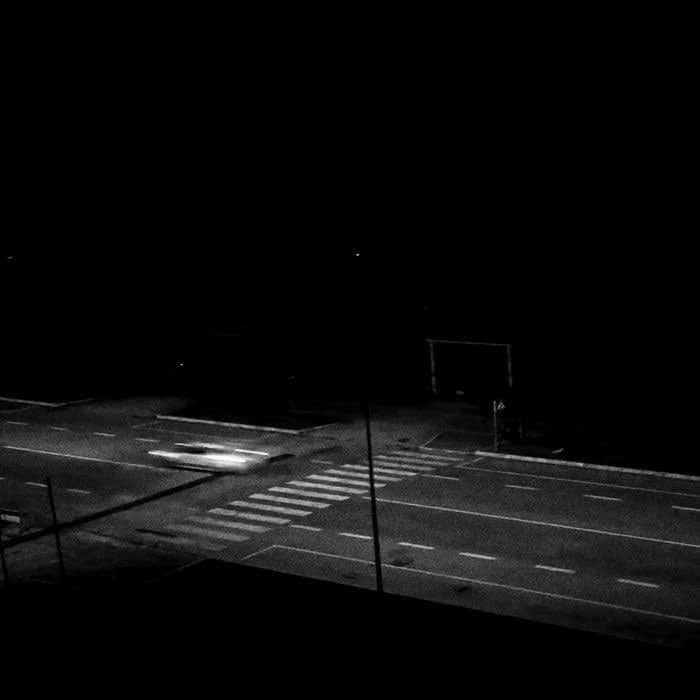
이탈리아 콜로세움 야간 풍경, The Colosseum in Rome, Image from Financial Times
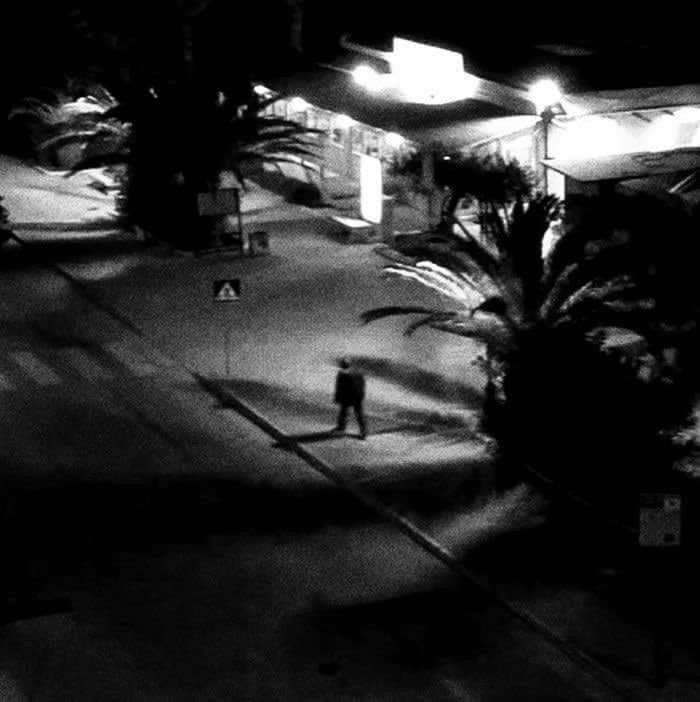
개 한마리만 돌아다니는 텅빈 광장, Piazza Beato Roberto in Pescara, Image from Graziano Panfili
코로나19와의 전쟁에서 몇몇 정부는 이미 새로운 감시 도구를 사용하고 있습니다.
가장 주목할 만한 사례는 중국입니다.
중국 당국은 사람들의 스마트폰을 면밀히 감시하고, 수억대의 얼굴 인식 카메라를 활용하고, 사람들에게 체온과 건강 상태를 확인하고 보고하도록 의무화함으로써, 코로나19로 의심되는 사람들을 신속하게 식별할 수 있을 뿐만 아니라, 그들의 움직임을 추적하고 그들과 접촉한 사람을 확인할 수 있습니다.
또한 다양한 모바일 앱들을 이용해 사람들은 근처에 코로나19 확진자들이 있는지 쉽게 확인할 수 있습니다.
이런 기술 사용은 동아시아에만 국한되지 않습니다.
이스라엘의 벤자민 네타냐후(Benjamin Netanyahu) 총리는 최근 이스라엘 보안국이 평시에 테러리스트들을 추적하기 위해 개발한 감시 기술을 코로나19 확진자들을 추적하는데 사용하는 것을 승인했습니다.
이와 관련 이스라엘 국회가 이 법안 승인을 거부하자, 네탄야후 총리는 “긴급명령(emergency decree)”으로 밀어부쳤습니다.
여러분은 이러한 모든 것이 전혀 새롭지 않다고 주장할 지도 모릅니다.
최근 몇 년 동안 정부와 기업들은 첨단 기술을 사람들을 추적하고, 감시하고, 조작하는데 사용해 왔습니다.
그러나 우리가 유의하지 않는다면 이번 전염병은 감시 체제의 역사에서 중요한 분수령이 될지도 모릅니다.
지금까지 거부해 온 국가의 대대적인 보안 감시 도구 보급이 정당화될 뿐만이 아니라 감시 기술 자체가 “근접감시(over the skin)”에서 “밀착감시(under the skin)”로 전면적으로 전환될 수 도 있기 때문입니다.
국가의 대대적인 보안 감시 도구 보급이 정당화될 뿐만이 아니라 감시 기술 자체가 “근접감시(over the skin)”에서 “밀착감시(under the skin)”로 전면적으로 전환될 수 도 있 습니다.
지금까지 당신이 스마트폰 화면을 터치하고, 링크를 클릭했을 때 정부는 정확히 무엇을 터치하고 클릭했는지를 알고 싶어했습니다.
하지만 코로나19로 인해서 관심의 초점이 바뀌었습니다. 이제 정부는 당신의 체온과 혈압을 알고 싶어 합니다.
위기라는 상황(The emergency pudding)
우리가 감시할 때 직면하는 문제 중 하나는 정확히 감사 대상이 누구인지, 앞으로 몇 년 동안 어떤 결과가 초래될지를 정확히 알지 못한다는 것입니다.
오늘날 감시 기술은 놀라운 속도로 발전하고 있습니다. 10년 전 공상 과학 소설에서나 가능해 보였던 것들이 오늘 날에는 당연한 것처럼 치부될 정도입니다.
모든 국민들에게 24시간 체온과 심박수를 모니터링할 수 있는 생체 인식 팔찌를 착용하도록 요구하는 가상의 정부가 있다고 생각해 보세요.
그 팔찌에서 생성된 생체 결과 데이터는 정부 알고리즘에 의해 저장되고 분석됩니다. 알고리즘은 여러분이 알아채기도 전에 여러분이 아프다는 것을 알게 될 것이고, 여러분이 어디에 있었는지, 여러분이 누구를 만났는지도 알게 될 것입니다.
그러한 알고리즘은 전염병 확산의 사슬을 약화시키고, 아예 싹을 잘라 버릴 수도 있습니다. 그러한 시스템은 틀림없이 수일 내에 전염병 확산을 막을 수 있을 것입니다.
멋지지 않나요?
물론, 단점은 이러한 방식이 무시무시한 새로운 감시 시스템을 합법화시켜 준다는 것입니다.
예를 들어, 제가 CNN보다는 폭스 뉴스를 클릭했다는 것을 안다면, 이를 통해서 제 정치적 견해와 제 성격까지도 유추해 낼 수 있습니다.
그런데 어떤 동영상을 볼 때 제 체온, 혈압, 심박수 등을 파악할 수 있다면, 무엇이 저를 웃게 하는지, 무엇이 저를 울게 하는지, 그리고 무엇이 저를 정말로 화나게 하는지 파악할 수 있습니다.
분노, 기쁨, 권태와 사랑은 열과 기침과 같은 생물학적 현상이라는 것을 기억야 합니다. 기침을 식별하는 기술로 웃음을 식별할 수 있습니다.
기업과 정부가 우리의 생체 정보를 일괄적으로 수집하기 시작하면, 그들은 우리가 아는 것보다 훨씬 더 우리를 잘 알 수 있습니다.
그리고 나면 그들은 우리 감정을 예측할 뿐만 아니라 우리의 감정을 조작하고 더 나아가 그들이 원하는 것을 팔 수 있습니다. 제품이든 정치인이든 말이죠.
생체정보를 이용한 감시는 케임브리지 애널리티카(Cambridge Analytica)의 데이터 해킹 기술을 석기 시대의 것처럼 보이게 할 것입니다. ( 케임브리지 애널리티카(Cambridge Analytica)는 2016년 미 대선당시 페이스북 개인정보를 해킹해 트럼프 대선 캠페인에 활용했었다. – 역자 주)
모든 국민이 24시간 생체 인식 팔찌를 착용해야 하는 2030년의 북한을 상상해 보세요.
만약 여러분이 위대한 지도자의 연설을 듣고 분노했다고 치죠. 정부는 당신이 차고 있는 팔찌의 생체 정보를 기반으로 당신의 분노 징후를 포착할 수 있습니다. 그러면 여러분은 끝장날 거예요.
불행히도, 현재 각국 정부들은 이런 조치를 취하지 않고 있습니다. 집단 마비가 국제사회를 사로잡고 있습니다.
(이러한 위기를) 극복할 진정한 리더가 보이지 않습니다.
전 세계 사람들은 몇주전부터 글로벌 공동 행동 계획을 마련하기 위한 세계 지도자들의 긴급 회의를 고대해 왔습니다.
그러나 겨우 이번주에야 G7 정상들의 화상회의가 열렸을 뿐입니다. 그리고 그 회의에서 어떤 결과도 얻지 못했습니다.
2008년 금융위기와 2014년 에볼라 전염병과 같은 이전의 글로벌 위기에서 미국은 글로벌 리더의 역할을 맡았습니다. 그러나 현 미국 정부는 지도자의 역활을 방기하고 있습니다.
미국 정부는 인류의 미래보다 미국의 위대함에 대해 훨씬 더 신경을 쓴다는 것을 분명히 했습니다.
심지어 미국 정부는 가장 가까운 동맹국들도 버렸습니다. 미국 정부가 EU로부터 모든 여행을 금지했을 때, 그 과감한 조치에 대해 EU와 전혀 협의하지 않았습니다.
더우기 코로나19 백신을 개발하고 있는 독일 제약회사에 독점 계약을 위해 10억달러를 제시해 독일 정부를 분개케 했습니다.
현 미국 정부가 마음을 바꾸어 글로벌 행동계획을 내놓더라도, 무책임하고, 실수를 인정하지 않으며, 모든 책임을 남에게 떠넘기면서도 모든 공로를 독차지하려는 지도자를 따를 국가가 거의 없을 것입니다.
만약 미국이 남긴 리더의 공백을 다른 나라들이 메우지 않는다면, 코로나19 확산을 막는 것이 훨씬 더 어려울 뿐만 아니라, 앞으로도 몇 년 동안 계속해서 국제 관계에 해를 끼칠 것입니다.
그러나 모든 위기는 또한 기회입니다.
우리는 현재의 전염병이 지구촌의 분열의 심각한 위험을 깨닫는 계기가 되길 바랍니다.
인류는 선택을 해야 합니다.
우리는 분열의 길을 걸을까요, 아니면 글로벌 연대의 길을 택할까요?
만약 우리가 분열을 선택한다면, 위기를 연장시킬 뿐만 아니라, 아마도 미래에 더 심각한 재앙을 초래할 것입니다.
만약 우리가 글로벌 연대를 선택한다면, 그것은 코로나19 바이러스에 대한 승리일 뿐만 아니라, 향후 일어날 21세기 모든 미래의 전염병의 위기에 대한 승리일 것입니다.
FT 기사 전문
Humankind is now facing a global crisis. Perhaps the biggest crisis of our generation.
The decisions people and governments take in the next few weeks will probably shape the world for years to come.
They will shape not just our healthcare systems but also our economy, politics and culture. We must act quickly and decisively. We should also take into account the long-term consequences of our actions.
When choosing between alternatives, we should ask ourselves not only how to overcome the immediate threat, but also what kind of world we will inhabit once the storm passes.
Yes, the storm will pass, humankind will survive, most of us will still be alive — but we will inhabit a different world.
Many short-term emergency measures will become a fixture of life. That is the nature of emergencies. They fast-forward historical processes.
Decisions that in normal times could take years of deliberation are passed in a matter of hours. Immature and even dangerous technologies are pressed into service, because the risks of doing nothing are bigger.
Entire countries serve as guinea-pigs in large-scale social experiments.
What happens when everybody works from home and communicates only at a distance? What happens when entire schools and universities go online? In normal times, governments, businesses and educational boards would never agree to conduct such experiments. But these aren’t normal times.
In this time of crisis, we face two particularly important choices. The first is between totalitarian surveillance and citizen empowerment. The second is between nationalist isolation and global solidarity.
Under-the-skin surveillance
In order to stop the epidemic, entire populations need to comply with certain guidelines. There are two main ways of achieving this. One method is for the government to monitor people, and punish those who break the rules.
Today, for the first time in human history, technology makes it possible to monitor everyone all the time. Fifty years ago, the KGB couldn’t follow 240m Soviet citizens 24 hours a day, nor could the KGB hope to effectively process all the information gathered.
The KGB relied on human agents and analysts, and it just couldn’t place a human agent to follow every citizen. But now governments can rely on ubiquitous sensors and powerful algorithms instead of flesh-and-blood spooks.
In their battle against the coronavirus epidemic several governments have already deployed the new surveillance tools.
The most notable case is China.
By closely monitoring people’s smartphones, making use of hundreds of millions of face-recognising cameras, and obliging people to check and report their body temperature and medical condition, the Chinese authorities can not only quickly identify suspected coronavirus carriers, but also track their movements and identify anyone they came into contact with.
A range of mobile apps warn citizens about their proximity to infected patients.
This kind of technology is not limited to east Asia. Prime Minister Benjamin Netanyahu of Israel recently authorised the Israel Security Agency to deploy surveillance technology normally reserved for battling terrorists to track coronavirus patients.
When the relevant parliamentary subcommittee refused to authorise the measure, Netanyahu rammed it through with an “emergency decree”.
You might argue that there is nothing new about all this.
In recent years both governments and corporations have been using ever more sophisticated technologies to track, monitor and manipulate people. Yet if we are not careful, the epidemic might nevertheless mark an important watershed in the history of surveillance.
Not only because it might normalise the deployment of mass surveillance tools in countries that have so far rejected them, but even more so because it signifies a dramatic transition from “over the skin” to “under the skin” surveillance.
Hitherto, when your finger touched the screen of your smartphone and clicked on a link, the government wanted to know what exactly your finger was clicking on.
But with coronavirus, the focus of interest shifts. Now the government wants to know the temperature of your finger and the blood-pressure under its skin.
The emergency pudding
One of the problems we face in working out where we stand on surveillance is that none of us know exactly how we are being surveilled, and what the coming years might bring.
Surveillance technology is developing at breakneck speed, and what seemed science-fiction 10 years ago is today old news.
As a thought experiment, consider a hypothetical government that demands that every citizen wears a biometric bracelet that monitors body temperature and heart-rate 24 hours a day.
The resulting data is hoarded and analysed by government algorithms.
The algorithms will know that you are sick even before you know it, and they will also know where you have been, and who you have met.
The chains of infection could be drastically shortened, and even cut altogether.
Such a system could arguably stop the epidemic in its tracks within days.
Sounds wonderful, right?
The downside is, of course, that this would give legitimacy to a terrifying new surveillance system.
If you know, for example, that I clicked on a Fox News link rather than a CNN link, that can teach you something about my political views and perhaps even my personality.
But if you can monitor what happens to my body temperature, blood pressure and heart-rate as I watch the video clip, you can learn what makes me laugh, what makes me cry, and what makes me really, really angry.
It is crucial to remember that anger, joy, boredom and love are biological phenomena just like fever and a cough.
The same technology that identifies coughs could also identify laughs.
If corporations and governments start harvesting our biometric data en masse, they can get to know us far better than we know ourselves, and they can then not just predict our feelings but also manipulate our feelings and sell us anything they want — be it a product or a politician.
Biometric monitoring would make Cambridge Analytica’s data hacking tactics look like something from the Stone Age.
Imagine North Korea in 2030, when every citizen has to wear a biometric bracelet 24 hours a day.
If you listen to a speech by the Great Leader and the bracelet picks up the tell-tale signs of anger, you are done for.
You could, of course, make the case for biometric surveillance as a temporary measure taken during a state of emergency.
It would go away once the emergency is over.
But temporary measures have a nasty habit of outlasting emergencies, especially as there is always a new emergency lurking on the horizon.
My home country of Israel, for example, declared a state of emergency during its 1948 War of Independence, which justified a range of temporary measures from press censorship and land confiscation to special regulations for making pudding (I kid you not).
The War of Independence has long been won, but Israel never declared the emergency over, and has failed to abolish many of the “temporary” measures of 1948 (the emergency pudding decree was mercifully abolished in 2011).
Even when infections from coronavirus are down to zero, some data-hungry governments could argue they needed to keep the biometric surveillance systems in place because they fear a second wave of coronavirus, or because there is a new Ebola strain evolving in central Africa, or because . . . you get the idea.
A big battle has been raging in recent years over our privacy.
The coronavirus crisis could be the battle’s tipping point. For when people are given a choice between privacy and health, they will usually choose health.
The soap police
Asking people to choose between privacy and health is, in fact, the very root of the problem.
Because this is a false choice.
We can and should enjoy both privacy and health. We can choose to protect our health and stop the coronavirus epidemic not by instituting totalitarian surveillance regimes, but rather by empowering citizens.
In recent weeks, some of the most successful efforts to contain the coronavirus epidemic were orchestrated by South Korea, Taiwan and Singapore.
While these countries have made some use of tracking applications, they have relied far more on extensive testing, on honest reporting, and on the willing co-operation of a well-informed public.
Centralised monitoring and harsh punishments aren’t the only way to make people comply with beneficial guidelines.
When people are told the scientific facts, and when people trust public authorities to tell them these facts, citizens can do the right thing even without a Big Brother watching over their shoulders.
A self-motivated and well-informed population is usually far more powerful and effective than a policed, ignorant population.
Consider, for example, washing your hands with soap. This has been one of the greatest advances ever in human hygiene.
This simple action saves millions of lives every year.
While we take it for granted, it was only in the 19th century that scientists discovered the importance of washing hands with soap.
Previously, even doctors and nurses proceeded from one surgical operation to the next without washing their hands.
Today billions of people daily wash their hands, not because they are afraid of the soap police, but rather because they understand the facts.
I wash my hands with soap because I have heard of viruses and bacteria, I understand that these tiny organisms cause diseases, and I know that soap can remove them.
But to achieve such a level of compliance and co-operation, you need trust.
People need to trust science, to trust public authorities, and to trust the media.
Over the past few years, irresponsible politicians have deliberately undermined trust in science, in public authorities and in the media.
Now these same irresponsible politicians might be tempted to take the high road to authoritarianism, arguing that you just cannot trust the public to do the right thing.
Normally, trust that has been eroded for years cannot be rebuilt overnight. But these are not normal times.
In a moment of crisis, minds too can change quickly.
You can have bitter arguments with your siblings for years, but when some emergency occurs, you suddenly discover a hidden reservoir of trust and amity, and you rush to help one another.
Instead of building a surveillance regime, it is not too late to rebuild people’s trust in science, in public authorities and in the media.
We should definitely make use of new technologies too, but these technologies should empower citizens.
I am all in favour of monitoring my body temperature and blood pressure, but that data should not be used to create an all-powerful government.
Rather, that data should enable me to make more informed personal choices, and also to hold government accountable for its decisions.
If I could track my own medical condition 24 hours a day, I would learn not only whether I have become a health hazard to other people, but also which habits contribute to my health.
And if I could access and analyse reliable statistics on the spread of coronavirus, I would be able to judge whether the government is telling me the truth and whether it is adopting the right policies to combat the epidemic.
Whenever people talk about surveillance, remember that the same surveillance technology can usually be used not only by governments to monitor individuals — but also by individuals to monitor governments.
The coronavirus epidemic is thus a major test of citizenship.
In the days ahead, each one of us should choose to trust scientific data and healthcare experts over unfounded conspiracy theories and self-serving politicians.
If we fail to make the right choice, we might find ourselves signing away our most precious freedoms, thinking that this is the only way to safeguard our health.
We need a global plan
The second important choice we confront is between nationalist isolation and global solidarity.
Both the epidemic itself and the resulting economic crisis are global problems.
They can be solved effectively only by global co-operation.
First and foremost, in order to defeat the virus we need to share information globally.
That’s the big advantage of humans over viruses.
A coronavirus in China and a coronavirus in the US cannot swap tips about how to infect humans.
But China can teach the US many valuable lessons about coronavirus and how to deal with it.
What an Italian doctor discovers in Milan in the early morning might well save lives in Tehran by evening.
When the UK government hesitates between several policies, it can get advice from the Koreans who have already faced a similar dilemma a month ago.
But for this to happen, we need a spirit of global co-operation and trust.
In the days ahead, each one of us should choose to trust scientific data and healthcare experts over unfounded conspiracy theories and self-serving politicians Countries should be willing to share information openly and humbly seek advice, and should be able to trust the data and the insights they receive.
We also need a global effort to produce and distribute medical equipment, most notably testing kits and respiratory machines. Instead of every country trying to do it locally and hoarding whatever equipment it can get, a co-ordinated global effort could greatly accelerate production and make sure life-saving equipment is distributed more fairly.
Just as countries nationalise key industries during a war, the human war against coronavirus may require us to “humanise” the crucial production lines.
A rich country with few coronavirus cases should be willing to send precious equipment to a poorer country with many cases, trusting that if and when it subsequently needs help, other countries will come to its assistance.
We might consider a similar global effort to pool medical personnel. Countries currently less affected could send medical staff to the worst-hit regions of the world, both in order to help them in their hour of need, and in order to gain valuable experience.
If later on the focus of the epidemic shifts, help could start flowing in the opposite direction. Global co-operation is vitally needed on the economic front too. Given the global nature of the economy and of supply chains, if each government does its own thing in complete disregard of the others, the result will be chaos and a deepening crisis.
We need a global plan of action, and we need it fast.
Another requirement is reaching a global agreement on travel. Suspending all international travel for months will cause tremendous hardships, and hamper the war against coronavirus.
Countries need to co-operate in order to allow at least a trickle of essential travellers to continue crossing borders: scientists, doctors, journalists, politicians, businesspeople.
This can be done by reaching a global agreement on the pre-screening of travellers by their home country.
If you know that only carefully screened travellers were allowed on a plane, you would be more willing to accept them into your country.
Unfortunately, at present countries hardly do any of these things.
A collective paralysis has gripped the international community.
There seem to be no adults in the room. One would have expected to see already weeks ago an emergency meeting of global leaders to come up with a common plan of action.
The G7 leaders managed to organise a videoconference only this week, and it did not result in any such plan.
In previous global crises — such as the 2008 financial crisis and the 2014 Ebola epidemic — the US assumed the role of global leader. But the current US administration has abdicated the job of leader.
It has made it very clear that it cares about the greatness of America far more than about the future of humanity.
This administration has abandoned even its closest allies. When it banned all travel from the EU, it didn’t bother to give the EU so much as an advance notice — let alone consult with the EU about that drastic measure.
It has scandalised Germany by allegedly offering $1bn to a German pharmaceutical company to buy monopoly rights to a new Covid-19 vaccine.
Even if the current administration eventually changes tack and comes up with a global plan of action, few would follow a leader who never takes responsibility, who never admits mistakes, and who routinely takes all the credit for himself while leaving all the blame to others.
If the void left by the US isn’t filled by other countries, not only will it be much harder to stop the current epidemic, but its legacy will continue to poison international relations for years to come. Yet every crisis is also an opportunity.
We must hope that the current epidemic will help humankind realise the acute danger posed by global disunity. Humanity needs to make a choice.
Will we travel down the route of disunity, or will we adopt the path of global solidarity?
If we choose disunity, this will not only prolong the crisis, but will probably result in even worse catastrophes in the future.
If we choose global solidarity, it will be a victory not only against the coronavirus, but against all future epidemics and crises that might assail humankind in the 21st century.
Yuval Noah Harari is author of ‘Sapiens’, ‘Homo Deus’ and ‘21 Lessons for the 21st Century’
// SearchWP Live Ajax Search, Basic setting, https://searchwp.com/docs/hooks/searchwp_minimum_word_length/functionmy_searchwp_live_search_configs( $configs ){
// override some defaults
$configs['default'] = array(
'engine' => 'default', // search engine to use (if SearchWP is available)'input' => array(
'delay' => 200, // wait 500ms before triggering a search'min_chars' => 1, // wait for at least 3 characters before triggering a search
),
'results' => array(
'position' => 'bottom', // 검색창 아래(bottom) where to position the results (bottom|top)'width' => 'css', // whether the width should automatically match the input (auto|css)'offset' => array(
'x' => 0, // x offset (in pixels)'y' => 5// y offset (in pixels)
),
),
'spinner' => array( // powered by http://fgnass.github.io/spin.js/'lines' => 10, // number of lines in the spinner'length' => 8, // length of each line'width' => 4, // line thickness'radius' => 8, // radius of inner circle'corners' => 1, // corner roundness (0..1)'rotate' => 0, // rotation offset'direction' => 1, // 1: clockwise, -1: counterclockwise'color' => '#000', // #rgb or #rrggbb or array of colors'speed' => 1, // rounds per second'trail' => 60, // afterglow percentage'shadow' => false, // whether to render a shadow'hwaccel' => false, // whether to use hardware acceleration'className' => 'spinner', // CSS class assigned to spinner'zIndex' => 2000000000, // z-index of spinner'top' => '50%', // top position (relative to parent)'left' => '50%', // left position (relative to parent)
),
);
// add an additional config called 'my_config'
$configs['my_config'] = array(
'engine' => 'supplemental', // search engine to use (if SearchWP is available)'input' => array(
'delay' => 200, // wait 500ms before triggering a search'min_chars' => 1, // 검색을 시작할 최소 입력 문자, wait for at least 1 characters before triggering a search
),
'results' => array(
'position' => 'bottom', // where to position the results (bottom|top)'width' => 'css', // whether the width should automatically match the input (auto|css)'offset' => array(
'x' => 0, // x offset (in pixels)'y' => 0// y offset (in pixels)
),
),
'spinner' => array( // powered by http://fgnass.github.io/spin.js/'lines' => 8, // number of lines in the spinner'length' => 6, // length of each line'width' => 5, // line thickness'radius' => 6, // radius of inner circle'corners' => 1, // corner roundness (0..1)'rotate' => 0, // rotation offset'direction' => 1, // 1: clockwise, -1: counterclockwise'color' => '#000', // #rgb or #rrggbb or array of colors'speed' => 1, // rounds per second'trail' => 60, // afterglow percentage'shadow' => false, // whether to render a shadow'hwaccel' => false, // whether to use hardware acceleration'className' => 'spinner', // CSS class assigned to spinner'zIndex' => 2000000000, // z-index of spinner'top' => '50%', // top position (relative to parent)'left' => '50%', // left position (relative to parent)
),
);
return $configs;
}
add_filter( 'searchwp_live_search_configs', 'my_searchwp_live_search_configs' );Code language:PHP(php)
4. 디자인 세팅
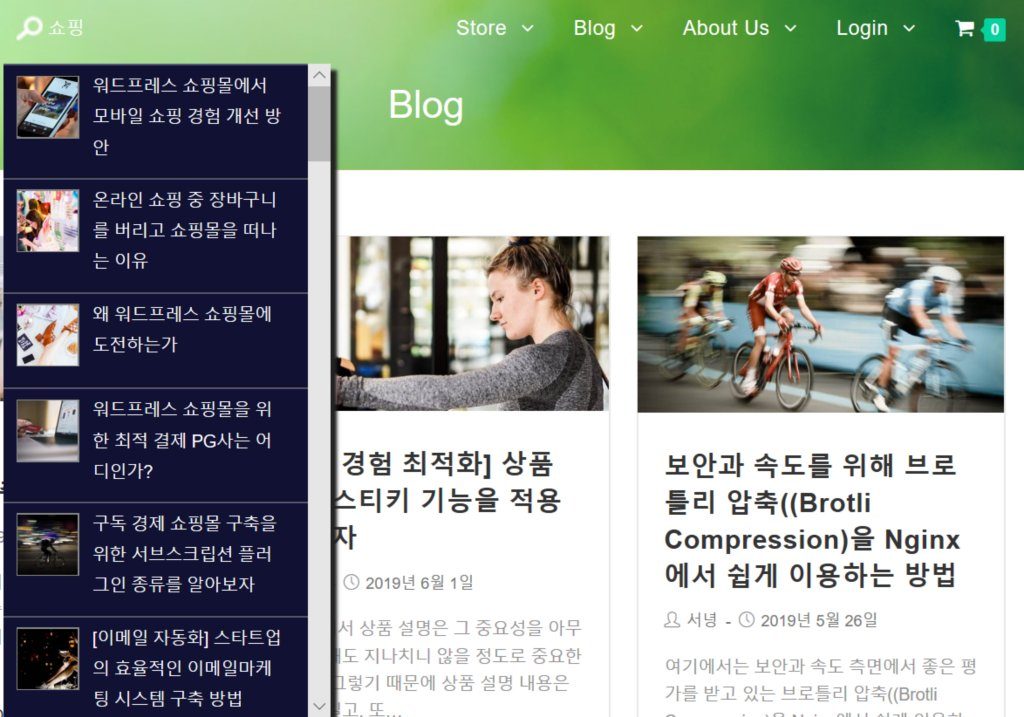
검색 결과를 보여주는 디자인을 세팅합니다. 이는 마찬가지로 커스텀 CSS 코드를 추가합니다.
검색 결과는 템플릿 시스템에 의해서 보여지기 때문에 이 템플릿 수정을 통해서 검색 결과 포맷을 변경할 수 있습니다.
SearchWP Live Ajax Search의 검색 결과를 보야주는 템플릿은 ~/wp-content/plugins/searchwp-live-ajax-search/templates/search-results.php이라는 파일에서 정의하고 있습니다.
이를 수정하고 안정적으로 유지 관리하기 위해서는 차일드 테마에서 관리할 수 있도록 만듭니다.
차일드 테마에서 searchwp-live-ajax-search라는 폴더를 만듭니다.
search-results.php라는 파일을 ~/wp-content/plugins/searchwp-live-ajax-search/templates/에서 복사해 옵니다.
복사해온 search-results.php 파일을 원하는 대로 수정합니다.
5.2. 테플릿 search-results.php 파일 수정
이 플러그인의 search-results.php 파일 내용을 아래와 같이 변경합니다.
<?php/**
* Search results are contained within a div.searchwp-live-search-results
* which you can style accordingly as you would any other element on your site
*
* Some base styles are output in wp_footer that do nothing but position the
* results container and apply a default transition, you can disable that by
* adding the following to your theme's functions.php:
*
* add_filter( 'searchwp_live_search_base_styles', '__return_false' );
*
* There is a separate stylesheet that is also enqueued that applies the default
* results theme (the visual styles) but you can disable that too by adding
* the following to your theme's functions.php:
*
* wp_dequeue_style( 'searchwp-live-search' );
*
* You can use ~/searchwp-live-search/assets/styles/style.css as a guide to customize
*/?><?phpif ( have_posts() ) : ?><?phpwhile ( have_posts() ) : the_post(); ?><?php $post_type = get_post_type_object( get_post_type() ); ?>
<div class="searchwp-live-search-result" style="white-space: nowrap;">
<spanstyle="display: inline-block; margin-left: 5px;"><?phpecho( get_the_post_thumbnail( $post->ID, array( 75, 75) ) ) ?></span>
<spanstyle="display: inline-block;">
<p><ahref="<?phpechoesc_url( get_permalink() ); ?>">
<?phpthe_title(); ?> »
</a></p>
</span>
</div>
<?phpendwhile; ?>
<?phpelse : ?>
<pclass="searchwp-live-search-no-results">
<em><?php_ex( 'Noresultsfound.', 'swplas' ); ?></em>
</p>
<?phpendif; ?>
Code language:PHP(php)
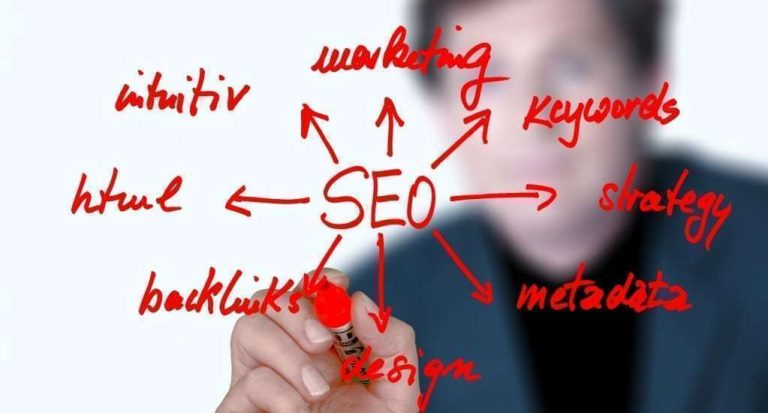
예전부터 이미지 중심으로 텍스트가 거의 없는 글은 SEO적으로 좋은 평가를 받지 못한다는 이야기가 많았습니다.
그래서 가능하면 텍스트를 사용해 어느 정도 내용을 갖춘 글을 작성하라는 조언이 많았습니다. 구글 광고 솔류션인 애드센스에서도 지나치기 짧은 글에는 광고를 노출하지 않도록 하고 있죠.
Yoast SEO 플러그인에서는 검색 최적화를 위해서 최소 300자 이상의 글을 작성토록 가이드하고 있죠.
반면 오늘 설명하는 Rank Math에서는 검색 최적화를 위해 최소 600자 이상의 글을 작성토록 가이드하고 있습니다.
아래는 SEO 플러그인 Rank Math 플러그인에서 제시하는 글 길이에 따른 점수입니다.
2,500자 이상 : 100% score
2,000 ~ 2,500자 이상 : 70% score
1,500 ~ 2,000자 이상 : 60% score
1,000 ~ 1,500자 이상 : 40% score
600 ~ 1,000자 이상 : 20% score
600자 이하 : 0% score
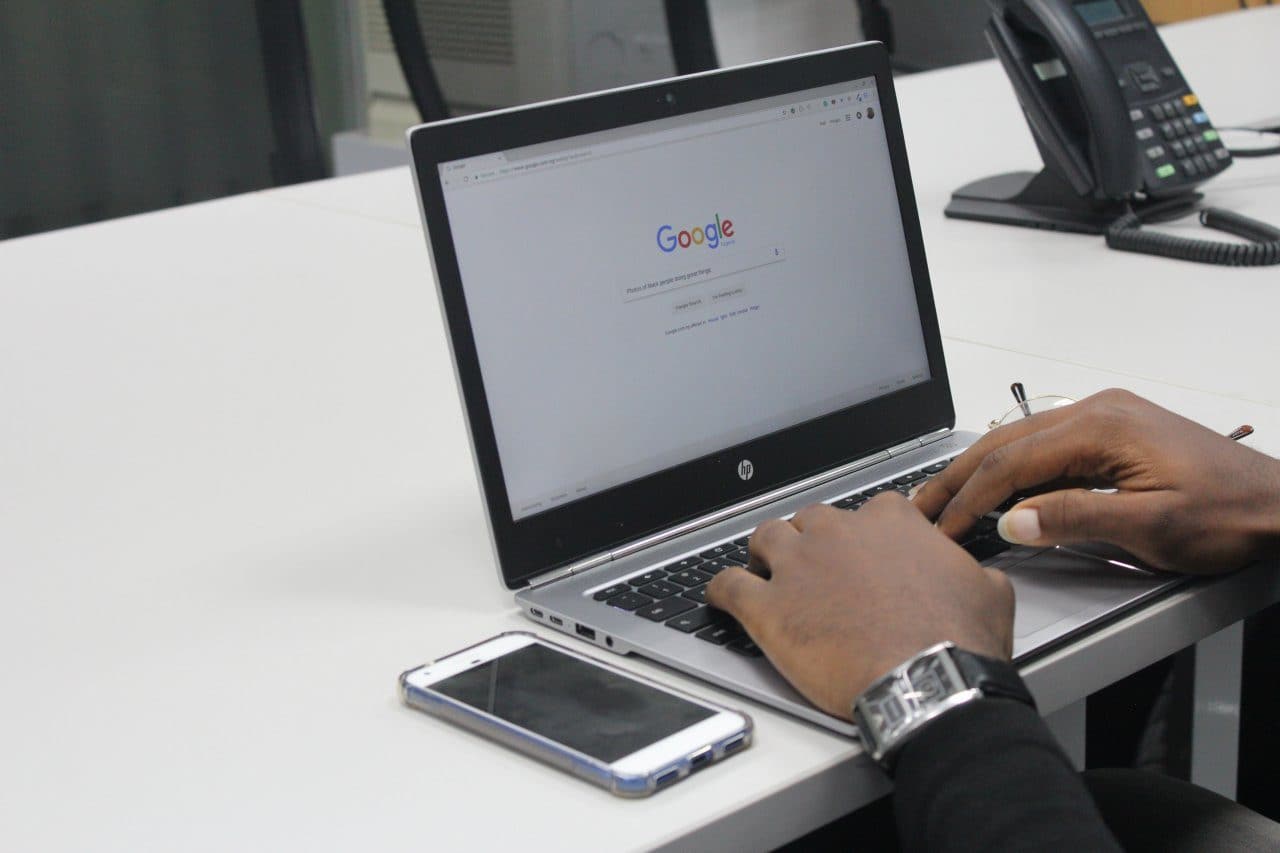
구글 검색 최적화 화면, Google search with notebook computer, Image – rbenjamin-dada
2. 검색 최적화 키워드가 반드시 있어야 할 곳은?
SEO적으로 좋은 평가를 받으려면 적절한 곳에 키워드가 있어야 합니다. 아무곳에 있는 것이 아니라 꼭 있어야 할 곳에 있다면 키워드를 많이 남발할 필요가 없겠죠.
Rank Math 플러그인에서 제안하는 키워드 장소는 아래와 같습니다.
글 제목(title)
글 내용(contents) – 만약 글 내용이 300자 이내의 짧은 글이라면 전체 글 내용 중에 포커스 키워드(focus keyword)가 있으면 되나, – 글 내용이 300자 이상으로 길어지면 글 내용의 처음 10% 부분에 포커스 키워드가 존재하면 됨
메타 디스크립션 (해당 글의 요약이라고도 할 수 있는데요. 자동으로는 글의 첫줄이 메타 디스크립션으로 사용됩니다. 별도로 이 내용을 편집할 수 있습니다. 프라이머리 키워드만 해당)
헤딩(H2, H3, H4…) 문단
이미지 alt(이미지를 설명하는 alt 텍스트에 카워드를 사용, 프라이머리 키워드만 해당)
Post Excerpt(메타 디스크립션처럼 대개는 맨 첫 줄이 사용되고 필요 시 별도로 편집 가능)
URL(포커스 키워드를 사용해 URL 주소를 만들었다면 SEO적으로 좋은 평가를 받을 것, 프라이머리 키워드만 해당)
3. 검색 최적화를 위한 키워드 사용 정도
SEO최적화를 통해서 구글 등 검색엔진에 잘 반영되려면 키워드는 어느 정도 사용해야 할까요?
예전 네이버 최적화 방법을 안내한 글들을 보면 가능하는 한 많은 키워드가 들어갈 수 있도록 내용을 작성하라는 조언들이 많이 있습니다.
그런데 Rank Math에서는 지나치게 키워드기 많이 있는 것은 오히려 좋지 않다고 합니다.
이 플러그인에서는 프라이머리 키워드(Primary keyword)와 두번째 키워드(Secondary keyword)를 주로 고려하는데요.
SEO 플러그인에서는 keyword density라는 용어를 사용하는데요. Rank Math 플러그인에서는 높은 키워드 밀집도보다는 낮은 키워드 밀집도가 더 낫다고 조언합니다. 정답은 없지만 키워드 밀집도(keyword density)는 1~1.5% 정도를 추천하고 있습니다.
이 SEO 플러그인에서는 키워드 밀집도(keyword density)가 2.5%를 넘어가면 경고를 보내고 있습니다. 너무 키워드를 남발하지 말라고요.
구글 어낼리틱스, Google Analytics, electronics
4. 메타 디스크립션의 길이는?
메타 디스크립션을 길게 작성한다고 반드시 좋은 것은 아닙니다.
Rank Math 플러그인은 메타 디스크립션의 길이는 120 ~ 160자정도가 적절하다고 조언합니다.
Rank Math와 같은 SEO 플러그인은 포커스 키워드를 기반으로 자동으로 메타디스크립션을 만들어주기 때문에 이용자가 크게 신경쓰지 않아도 된다고 합니다.
특히 엄청나게 많은 글을 가진 블러그나 사이트에 Rank Math 플러그인을 적용 시도 포커스 키워드만 제대로 등록되어 있다면 자동으로 첫번째 문장을 메타디스크립션 이면서 동시에 post excerpt를 만들어 준다고 합니다.
4. 인/아웃 바운드 링크(link) 활용
구글은 사이트의 신뢰지수 또는 글의 신뢰를 높이기 위해서는 아웃 바운드 링크나 인바운드 링크를 적극 사용하기를 추천합니다.
Rank Math 플러그인도 글의 신뢰 수준을 높이기 위해서 1개 이상의 외부 글 링크를 걸도록 추천하고 있으며, 특히 사이트 내부 글을 링크해 내부 콘텐츠 연결은 반드시 활용토록 강조합니다.
5. URL 길이는?
URL 길이도 SEO에 영향을 미친다고 합니다.
Multiple URL length studies에 따르면 짧은 URL일수록 명확하게 인식되므로 오히려 SEO 평가가 좋다고 합니다.
이 플러그인 제작자가 테스트한 바에 따르면 URL 길이기 75자가 넘어가면 좋지 않다고 하네요. 가능하면 75자 이내로 URL 주소를 사용하도록 권고하고 있습니다.
그리고 SEO에서 체크하는 URL 길이는 이부분만이 아니라 전체 URL 길이를 말합니다. 즉 사이트 주소를 포함해 포스트 타이틀을 포함하는 전체 주소를 말합니다.
“https://happist.com/571229/seo-플러그인-rank-math/”로 보여지는 전체 주소를 말합니다.
그리고 아직 Rank Math 플러그인은 한글인식에 문제가 있어 한글로 된 URL 주소는 “rank-math%eb%a5%bc-%ec%9d%b4%ec%9a%a9%ed%95%9c-%ea%b2%80%ec%83%89-%ec%b5%9c%ec%a0%81%ed%99%94-%eb%b0%a9%eb%b2%95″로 인식하고 이러한 주소는 금방 75자이상으로 인식되기 때문에 점수가 낮아지는 문제를 보입니다.
6. 기타 SEO를 높이는 방법들
여기서는 위에서 언급되지 않았지만 SEO를 높이는 방법으로 제안되는 다양한 방법에 대해서 살펴봅니다.
6.1. 숫자가 들어간 타이틀
매력적이고 눈길을 끄는 타이틀은 검색 노출 시 이용자들에게 궁금증을 불러일으키고 클릭랗 수 있게 만듭니다. 노출량 대비 클릭율이 높아야 제대로 된 SEO가 구현되겠죠.
그래서 매력적인 타이틀을 만드는 방법에 대한 다양한 가이드가 있습니다.
이용자들이 더 많은 클릭을 할 수 있는 방법중의 하나로 많이 추천되는 것이 타이틀에 숫자를 포한하는 것입니다.
사람들이 많이 공유하는 글중에서는 ~하기 위한 10가지 방법 등등과 같이 10가지, Top10 등과 같은 수치를 사용한 제목들이 눈길을 끌고 인기를 끌고 있습니다.
그렇기에 Rank math 플러그인에서 제목에 숫자를 사용하라고 조언합니다.
6.2. 목차 제공
글의 길이가 매우 길어진다면 글의 목차(Table of Contents)를 보여주어 현재 위치가 글의 어느 부분이라는 것을 알려주는 것이 필요합니다.
헤딩 등을 적절하게 사용했다면 목자(Table of Contents) 플러그인을 사용하면 쉽게 목차를 보여주어 사용성을 높일 수 있습니다.
6.3. 가독성을 위한 짧은 문단 사용
만연체를 즐겨 사용하시는 분들중에서는 한 문단을 상당히 길게 설명하는 경우가 있죠.
문단이 너무 길어지면 글 자체를 이해하는데 시간이 걸리고, 이야기의 핵심을 전달하는데 실패할 수 있습니다. 열심히 길게 설명했는데 상대방은 어뚱하게 이해하고 어뚱한 반응을 보이는 경우가 있어 속이 타는 경우가 왕왕 발생합니다.
그렇기 대문에 커뮤니케이션을 쉽게 명확하게하기 위해서는 설명하는 문단들을 짧게 짧게 만들어 커뮤니케이션하는 것이 좋습니다. 우리가 영어 배울 시 긴 문장을 짧게 몇개로 쪼개어 해석하면 좀더 명확히 문장을 이해하듯이..
6.4. 이미지와 동영상을 적극적으로 사용
이미지나 동영상을 사람들이 선호하는 이유는 오감을 통해서 정보를 전달하기 때문에 상당히 이해하기 쉽습니다.
그렇기때문에 너무 글 중심으로 가지말고 이미지나 동영상을 적절하게 사용함으로서 글의 이해를 크게 도울 수 있습니다.
읽는다면 10%를 이해합니다.
듣는다면 20%를 이해합니다.
눈으로 볼 수 있다면 30%를 이해합니다.
눈으로 보고 귀로 들을 수 있다면 50%를 이해합니다.
말하면서 쓴다면 70%를 이해할 수 있습니다.
실제 행동으로 실행하낟면 90%를 이해할 수 있습니다.
이러한 원리에 따라서 보고 들을 수 있도록 이미지와 동영상을 적극 활용해 글을 작성한다면 이해를 높이고 설득력을 높일 수 있기때문에 SEO적으로도 좋은 평가를 받을 수 있습니다.





![[워드프레스 팁] 워드프레스 인용문 스타일(Blockquote Style) 변경하기](https://happist.com/wp-content/uploads/2020/03/워드프레스-인용문-스티일-wordpress-blockquote-style-768x399.jpg "[워드프레스 팁] 워드프레스 인용문 스타일(Blockquote Style) 변경하기")

![[트렌드 차트] 한국 인터넷 이용률 트렌드(2000년 ~ 2019년)](https://happist.com/wp-content/uploads/2018/08/컴퓨터-스마트폰-작업-공간-domenico-loia-Featured-768x310.jpg "[트렌드 차트] 한국 인터넷 이용률 트렌드(2000년 ~ 2019년)")



 Reload document
  Open in new tab